
 レッスンを予約する
Step 1
Read the Article
Read the article to understand the main idea.
記事を読んで、おおよその内容をつかみましょう。
Ancient Roman slaves often ate better than ordinary people, new discoveries show
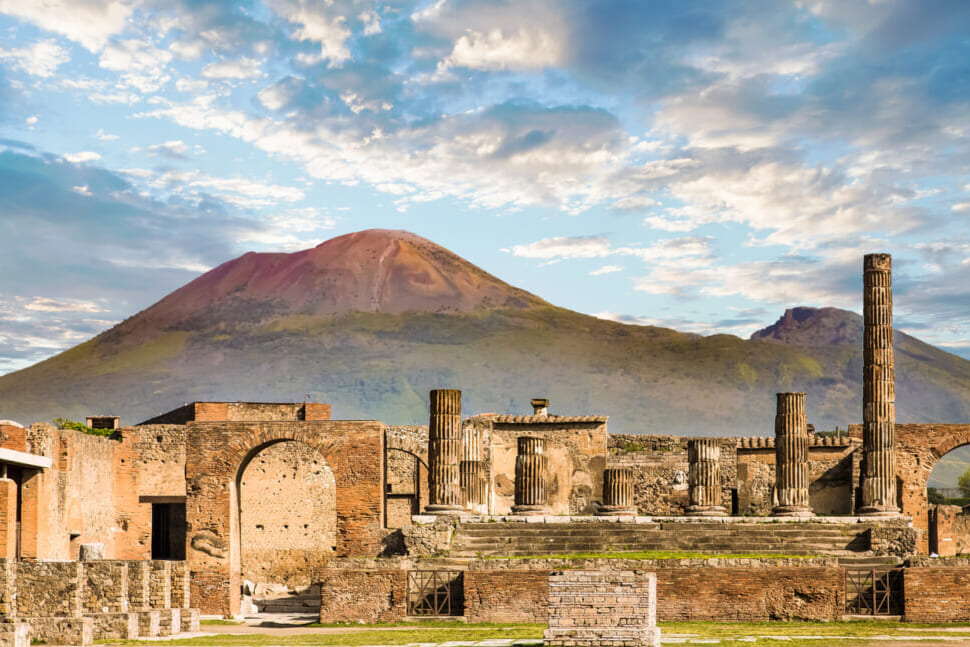
While slaves in the ancient Roman city of Pompeii were considered no more than “speaking tools,” some received better food than ordinary people, Italy’s culture ministry said Dec. 5, citing evidence from recent excavations. Amphora jugs with fava beans and a large bowl with fruits — pears, apples and sorbs — were found on the first floor of a servants quarter of a large villa in Civita Giuliana, a northern suburb of ancient Pompeii, the statement said.
The slaves lived on the ground floor in rat-infested 16-square-meter cells that contained up to three people, but archaeologists think their nutrition was enhanced to keep up their productivity, the statement said.
“It could thus happen that the slaves of the villas around Pompeii were better fed than many formally free citizens, whose families lacked the bare minimum to live on and who were therefore forced to beg from the city’s notables,” the ministry said. Ordinary working-class people typically relied on a simple wheat-based diet.
(Reuters)
Step 2
Check the Vocabulary and Phrases
Check the following vocabulary and phrases.
以下の単語やフレーズの発音、意味、使い方を確認しましょう。
excavation
発掘調査
an archaeological dig where artifacts and remains are uncovered and studied
Recent excavation revealed important artifacts from the ancient era, shedding light on history.
最近の発掘調査で古代の重要な遺物が明らかになり、歴史が解明されました。
servant quarter
使用人の居住区域
rooms or living areas in a large house or building where servants/staff live
The old mansion still has servant quarters on the top floor, where staff used to sleep and eat.
その古い邸宅には最上階に使用人部屋が今も残っています。かつてそこではスタッフが寝起きし食事をしていました。
infested
(害虫などが)はびこった
full of many insects or animals, especially in a way that is unpleasant or harmful
The old house was infested with insects, so they called an exterminator.
その古い家は虫だらけだったので、駆除業者を呼びました。
beg
物乞いをする、施し物を受ける
to ask for money or food because you are poor
He refused to beg for money, even when he had no food left and the weather was freezing.
彼は食べ物がなく、凍えるような寒さの中でも、お金を求めて物乞いすることを拒みました。
notable
名士
a famous or important person
The charity event was attended by several local notables, including the mayor and a well-known artist.
その慈善イベントには、市長や有名な芸術家を含む数名の地元の著名人が出席しました。
Step 3
Comprehension Questions
Answer the following questions based on the article.
理解度問題に挑戦しましょう。
What evidence showed that some ancient Roman slaves were better fed than ordinary people?
Why did archaeologists think some Roman slaves were given better nutrition?
Step 4
Discussion
Share your opinions on the following questions.
以下の質問について、自分の考えを述べてみましょう。
Do you think it is surprising that some ancient Roman slaves ate better than ordinary people? Why or why not?
The slaves lived in small, rat-infested rooms. How do you think their living conditions affected their lives and mental health?
Do you think providing better food to slaves was kindness or simply a way to control them? Why?
What can food tell us about social class and power in a society?
Can you think of examples today where workers are treated poorly but are given benefits to keep them productive?