
 レッスンを予約する
Step 1
Read the Article
Read the article to understand the main idea.
記事を読んで、おおよその内容をつかみましょう。
A rare wooden horn featured in the Met’s new “Tristan und Isolde”
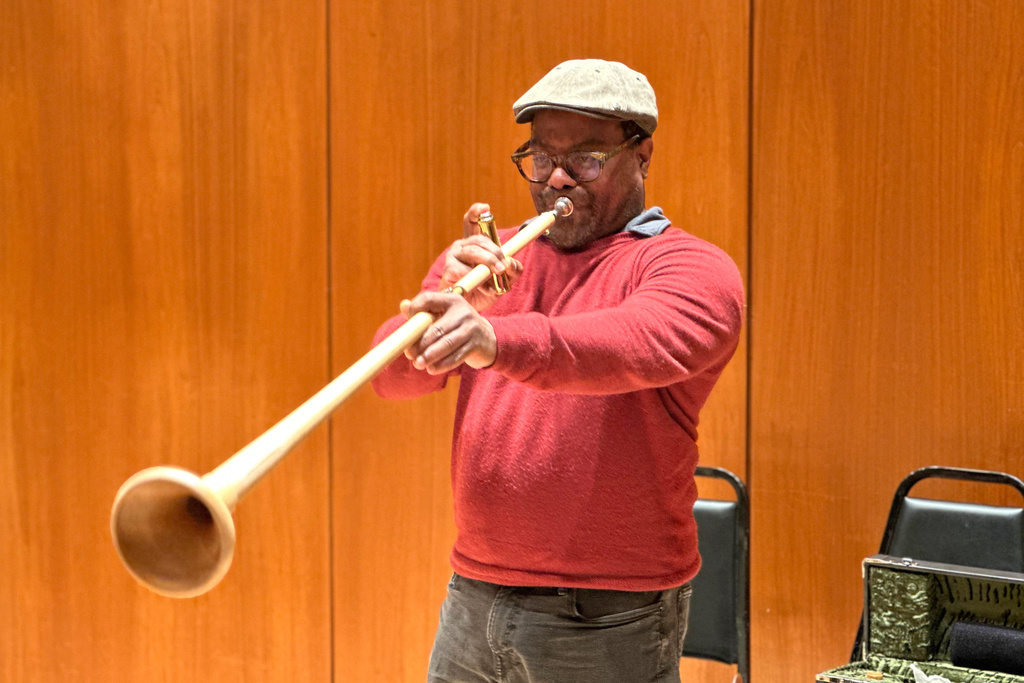
A rare wooden horn called a holztrompete is being used in the Metropolitan Opera’s new production of Wagner’s “Tristan und Isolde.” Near the end of the opera, the instrument is played offstage as Tristan waits for the ship carrying Isolde and King Marke. The production opened on March 9, 2026, and its unusual sound is something many audience members have probably never heard before.
Billy R. Hunter Jr., the Met’s principal trumpet player, performs on the nearly 4-foot-long (about 122 cm) instrument. It was specially designed to follow Wagner’s unclear instructions. Wagner originally wrote the music for an English horn, but he also wanted a strong, natural sound, similar to that of an alphorn. In an 1861 letter, he described an instrument made of wood, at least 3 feet long (about 91 cm), almost like a trumpet, and slightly curved.
Over the years, opera companies have used different instruments for this part, including the Heckel-clarina and the tárogató, a woodwind instrument used in Hungarian folk music. The Met used a tárogató for many years.
In 2008, conductor Daniel Barenboim brought a holztrompete to the Met, introducing the instrument there in modern performances. Later, the Met ordered its own version from a German maker. Hunter said it is more difficult to control than a regular trumpet because it has only one valve and offers almost no way to adjust the pitch. He practiced it for a month at home before the mostly sold-out run, which continues through April 4, 2026.
(AP)
Step 2
Check the Vocabulary and Phrases
Check the following vocabulary and phrases.
以下の単語やフレーズの発音、意味、使い方を確認しましょう。
production
公演
a movie, play, broadcast, etc. that is created for people to watch or listen to
Our school will put on a new production next month.
私たちの学校は来月、新しい公演を上演します。
perform on
~を演奏する
to play a musical instrument in front of an audience, usually in a formal or public setting
She performed on the piano at the concert and received a standing ovation.
彼女はコンサートでピアノを演奏し、スタンディングオベーションを受けました。
curved
曲がった
having a round shape
The road followed a curved path along the edge of the mountain.
その道は山の端に沿って曲がりくねった道をたどっていました。
adjust
調整する
to change something slightly, especially to make it more correct, effective, or suitable
You can adjust the chair to make it more comfortable.
そのイスは、もっと座りやすくなるように調整できます。
run
連続公演
a series of performances of a play or film
The show had a successful run at the theater and attracted large audiences every night.
その公演は劇場で成功した上演期間を迎え、毎晩多くの観客を集めました。
Step 3
Comprehension Questions
Answer the following questions based on the article.
理解度問題に挑戦しましょう。
What unusual experience might audience members have during Tristan und Isolde?
Why is the holztrompete difficult for musicians to play?
Step 4
Discussion
Share your opinions on the following questions.
以下の質問について、自分の考えを述べてみましょう。
Have you ever listened to opera? If not, what image do you have for it?
Have you ever heard a unique or unusual musical instrument? What did it sound like?
Would you prefer to watch a traditional performance or a modern one with new ideas? Why?
How can live music performances create a different experience from recorded music?
How do you think new or rare instruments can change the audience’s experience of music? Why?