
 レッスンを予約する
Step 1
Read the Article
Read the article to understand the main idea.
記事を読んで、おおよその内容をつかみましょう。
History: The rise and legacy of the Mayan Civilization
The Maya created one of the greatest civilizations in the ancient Americas. Unlike other Mesoamerican empires, the Maya were not politically unified. They were unified culturally, although they spoke thirty different languages.
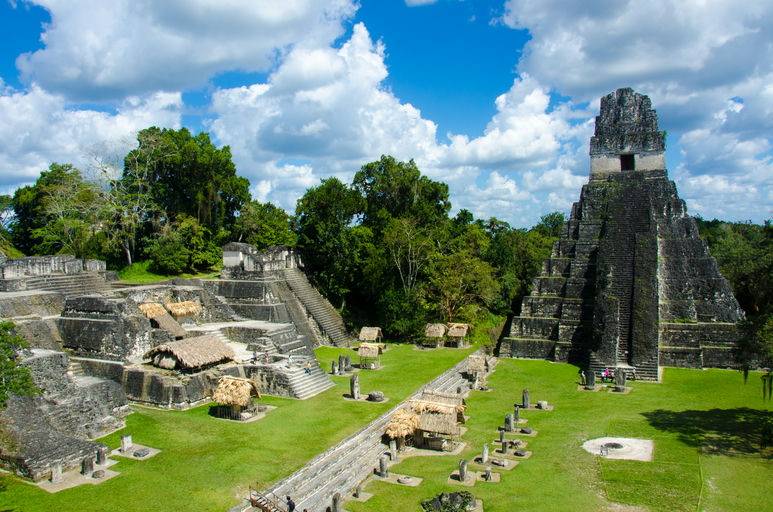
They occupied three areas of the Yucatán Peninsula: the northern flatlands, the central tropical rainforest, and the southern volcanic highlands. The Maya in each area used intensive farming techniques like hillside terraces and canals for drainage, water storage, and fishfarming. Each small Mayan kingdom had a capital city with elaborate architectural complexes including plazas, palaces, pyramids, and ball courts. Each capital was surrounded by a network of towns and villages supplying food, crafts, and labor. In return for supplying these essential goods, the capital protected them from starvation and external attack.
The Mayans were skilled painters, scribes, and potters, and they used hieroglyphic designs. We know this because archaeologists have found their artifacts in the watery bottoms of cenotes, natural pits or sinkholes caused by collapsed limestone bedrock.
Between 500 and 800 A.D., the population reached five million. However, the population dropped dramatically between 800 and 900, due to agricultural, environmental, and political reasons.
Mayan civilization did not collapse but underwent a transition. In the twenty-first century, the Mayan world is varied and spread across the national borders between Mexico, Guatemala, and Honduras.
(The Japantimes Alpha)
Step 2
Check the Vocabulary and Phrases
Check the following vocabulary and phrases.
以下の単語やフレーズの発音、意味、使い方を確認しましょう。
hillside terraces
山腹の段々畑
Flat steps made on the side of a hill so farmers can grow crops there
Farmers grow rice on hillside terraces to make use of the steep land.
農家は傾斜地を活用するために、山の斜面の段々畑で米を育てます。
drainage
排水
The process by which water or liquid waste is drained from an area
Good drainage is essential to prevent water from damaging the building’s foundation.
建物の基礎を水害から守るためには、良好な排水が不可欠です。
elaborate
精巧な、精緻な
Very complicated and detailed; carefully prepared and organized
The palace is famous for its elaborate decorations and gold ceilings.
その宮殿は精巧な装飾と金色の天井で有名です。
hieroglyphic
象形文字の
Using hieroglyphs (= pictures or symbols, representing a word, syllable or sound, especially as used in ancient Egyptian and other writing systems)
The walls of the ancient temple are covered with hieroglyphic inscriptions.
古代の神殿の壁は象形文字の碑文で覆われています。
archaeologist
考古学者
A specialist who studies human history and prehistory by excavating sites and analyzing artifacts, structures, and other physical remains
The archaeologist discovered ancient tools buried under the desert sand.
考古学者は砂漠の砂の下に埋もれた古代の道具を発見しました。
Step 3
Comprehension Questions
Answer the following questions based on the article.
理解度問題に挑戦しましょう。
What exchange is described in the article between Mayan capitals and surrounding towns?
How do researchers know that the Mayans were skilled?
Step 4
Discussion
Share your opinions on the following questions.
以下の質問について、自分の考えを述べてみましょう。
Are you interested in ancient civilizations? Why or why not?
Would you like to visit a site with Mayan ruins? Why or why not?
How do you think life in a Mayan village was different from life in the capital city?
If you lived in a Mayan kingdom, would you prefer to be a farmer, craftsperson, or scribe? Why?
Do you think modern society can learn anything from the Maya? What?