
 レッスンを予約する
Step 1
Read the Article
Read the article to understand the main idea.
記事を読んで、おおよその内容をつかみましょう。
Jingdezhen works to keep its porcelain traditions alive
Chen Qing is a Chinese porcelain artist. Her family has done this work since about 1860 in Jingdezhen, a city known as China's "Porcelain Capital." For many years, they have kept the recipe for their special red color a secret. Chen's mother memorized it, and Chen herself only learned it after she turned 30.
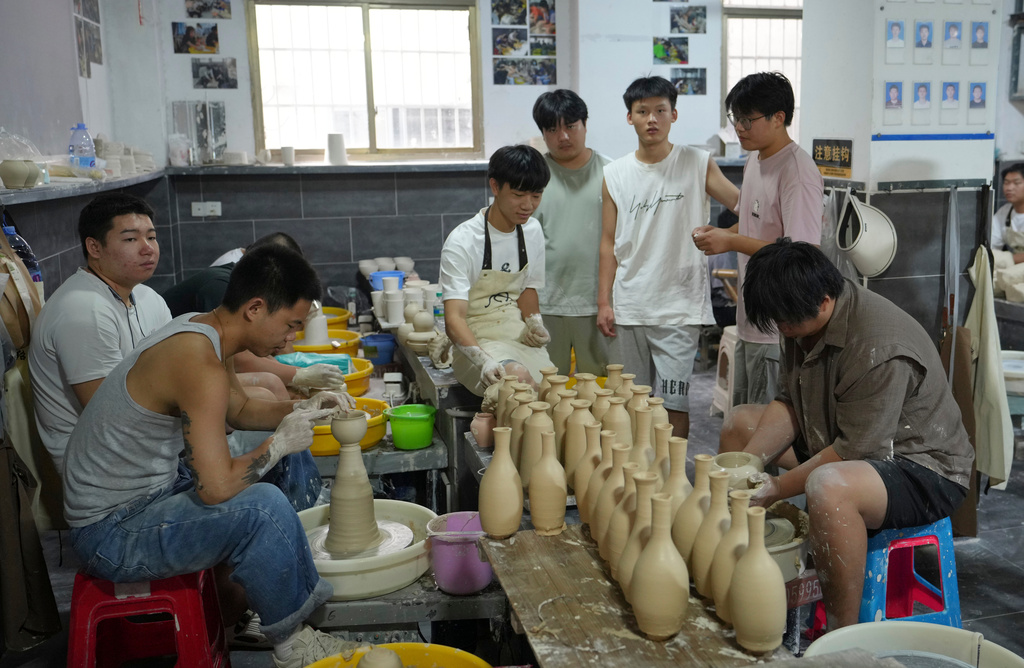
Jingdezhen has produced pottery for more than 2,000 years. In 2026, its porcelain sites were added to UNESCO's World Heritage List, an international list of important cultural places. The city's craftspeople still use old techniques that were once used to make porcelain for China's emperors.
The work is slow and very difficult. Painting a single teacup can take several days. Even a tiny bit of dust or a drop of sweat can ruin it. "Mastering a craft is a lifelong process," Chen said.
To protect this heritage, the local Imperial Kiln Institute, a pottery research center, studies and repairs old items. It has started using new technology, including artificial intelligence, to match broken pieces and put them back together.
Today, universities and special programs also bring in young Chinese and foreign artists, including Huang Qi. She studied in the city, then moved away to work, but later decided to return. For her, Jingdezhen's place on the World Heritage List makes the future look brighter.
(AP)
Step 2
Check the Vocabulary and Phrases
Check the following vocabulary and phrases.
以下の単語やフレーズの発音、意味、使い方を確認しましょう。
porcelain
磁器
a hard, white substance made by baking clay, used for making delicate cups, plates, and other objects; objects made of this substance
My grandmother keeps her porcelain cups in a cabinet.
祖母は、磁器のカップを戸棚にしまっています。
pottery
陶磁器、焼き物
pots, dishes, and other objects that are made from baked clay
We bought some beautiful pottery at a local market.
私たちは、地元の市場で素敵な焼き物を買いました。
ruin
台無しにする
to spoil or damage something so badly that it is no longer good or useful
The heavy rain ruined our picnic in the park.
激しい雨で、公園でのピクニックが台無しになりました。
craft
工芸
an activity or job that needs skill, especially in making things by hand
Making baskets by hand is an old craft.
かごを手で作るのは、古くからある工芸です。
lifelong
生涯にわたる
continuing for the whole of a person's life
Reading was a lifelong hobby for my father.
読書は、父にとって生涯にわたる趣味でした。
Step 3
Comprehension Questions
Answer the following questions based on the article.
理解度問題に挑戦しましょう。
When did Chen Qing's family begin making porcelain?
Why does Huang Qi feel hopeful about the future of Jingdezhen?
Step 4
Discussion
Share your opinions on the following questions.
以下の質問について、自分の考えを述べてみましょう。
Which handmade things are you interested in most, such as pottery, jewelry, or clothes? Please explain your answer.
Would you like to learn a skill or hobby that takes a long time to get good at? Why or why not?
Why do you think some families keep their craft techniques secret?
In the article, AI is used to repair old porcelain. How else could new technology help traditional crafts? Can you think of an example?
What traditional craft from your country would you like to see passed on to the next generation? Why?