
 レッスンを予約する
Step 1
Read the Article
Read the article to understand the main idea.
記事を読んで、おおよその内容をつかみましょう。
Amateur archaeologist finds Germany’s largest ancient Roman coin treasure
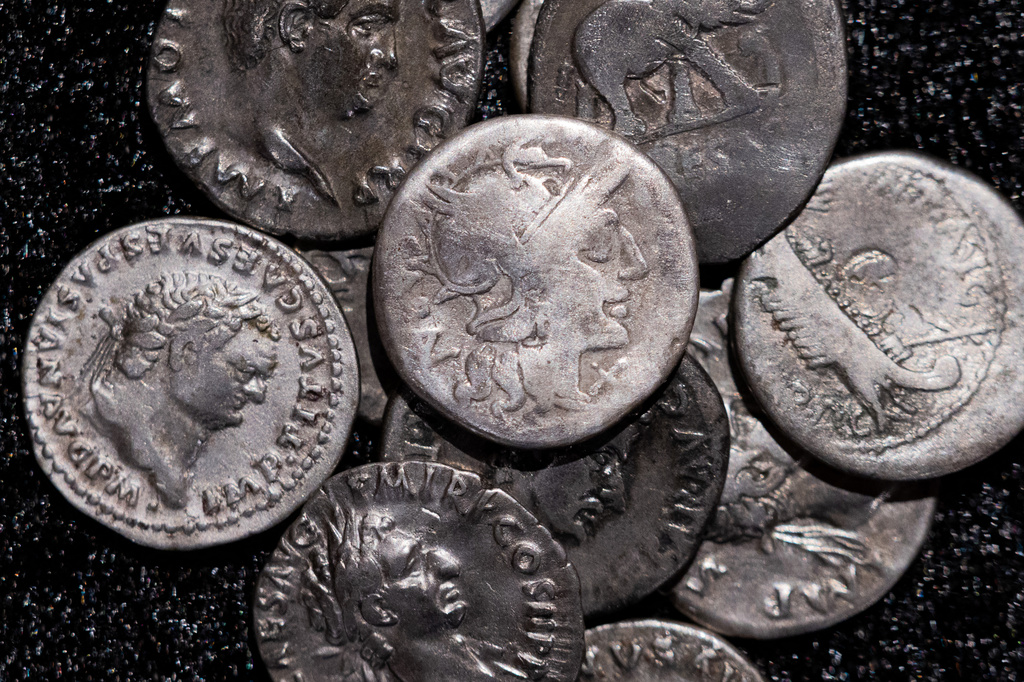
An amateur archaeologist who found Roman silver coins in western Germany soon realized his find was far greater than it first seemed. In 2025, Oliver Riedl was searching a field near Wesseling, a town south of Cologne. When his metal detector kept beeping, he contacted local officials for help. A team of experts then dug up 934 silver denarii, ancient Roman coins. "It was clear to me that there was something bigger buried here," Riedl said.
On September 22, 2026, the regional archaeological office announced that it was the largest treasure ever found in Germany from the time of Roman Emperor Hadrian. Weighing 3.1 kilograms, it went on display the same day at the LVR-LandesMuseum Bonn, a local museum.
The money was probably buried on purpose in the second quarter of the second century A.D. "Of course, we can only speculate about the motives, but it's very likely that someone wanted to keep this money safe," said Erich Classen, the state archaeologist who directs the office. "After all, banks didn't exist back then."
Although Roman treasures are not unusual, few others from that century are as extensive as this one, and the value is hard to estimate. The pay of Roman soldiers offers a clue. Rahel Otte, a researcher, explained that an ordinary soldier then earned 300 denarii a year, and that about half went to food and equipment. Such a soldier would have needed to save all his spare income for about six years to gather so much money, she noted.
(AP)
Step 2
Check the Vocabulary and Phrases
Check the following vocabulary and phrases.
以下の単語やフレーズの発音、意味、使い方を確認しましょう。
archaeologist
考古学者
a person who studies the buildings, tools, and other objects of people who lived in the past
My uncle is an archaeologist, and he often travels to study old temples.
私のおじは考古学者で、古い寺院を調べるためによく旅に出ます。
metal detector
金属探知機
a machine that makes a sound when it finds metal, especially metal hidden under the ground
He used a metal detector to find his lost ring on the beach.
彼は浜辺でなくした指輪を探すために金属探知機を使いました。
dig up(過去形:dug up)
掘り出す
to remove something from the ground by digging
The dog dug up an old bone in the backyard.
その犬は裏庭で古い骨を掘り出しました。
motive
動機
a reason for doing something, especially one that is not easy to see
Her main motive for learning Spanish was to talk with her friends in Mexico.
彼女がスペイン語を学んだ主な動機は、メキシコにいる友達と話すことでした。
extensive
大規模な
large in amount or size
The city library has an extensive collection of books about art.
市立図書館には、美術に関する大規模な蔵書があります。
Step 3
Comprehension Questions
Answer the following questions based on the article.
理解度問題に挑戦しましょう。
How many coins did the experts find in total?
Why did someone most likely hide the coins under the ground?
Step 4
Discussion
Share your opinions on the following questions.
以下の質問について、自分の考えを述べてみましょう。
Have you ever found something interesting or unexpected by chance? If not, what would you like to find someday?
If you found a valuable treasure, what would you do with it?
Museums put old objects on display so that many people can see them. Do you enjoy visiting museums? Why or why not?
Why do you think someone buried these coins and never came back for them? What is your best guess?
Metal detectors helped discover this treasure. What new technology do you think will be used by archaeologists in the future?