
 レッスンを予約する
Step 1
Read the Article
Read the article to understand the main idea.
記事を読んで、おおよその内容をつかみましょう。
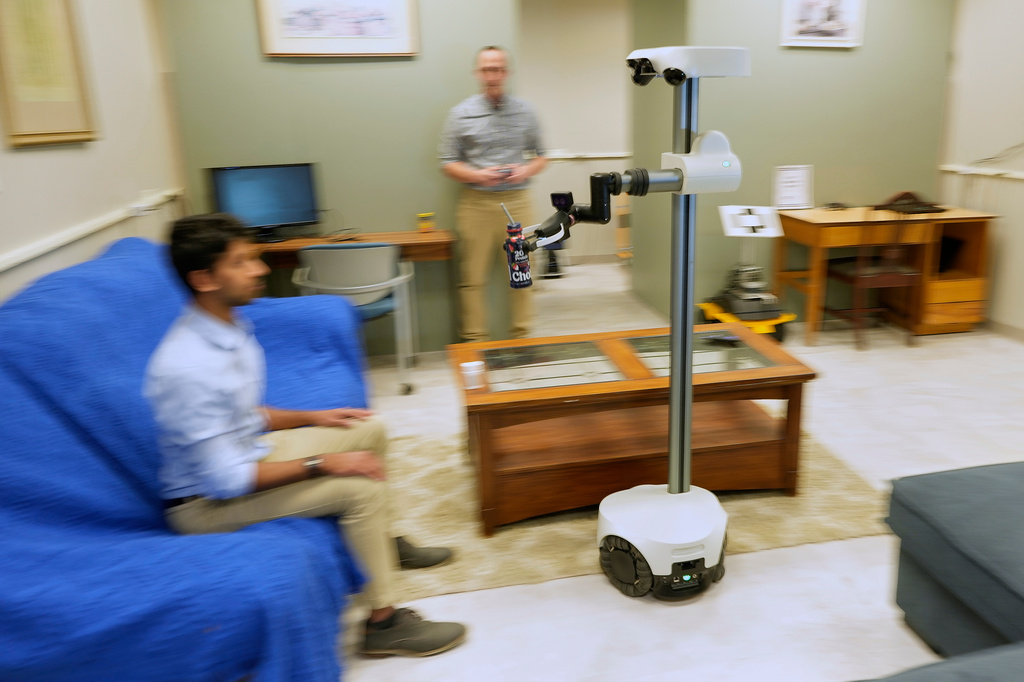
A robot is helping a couple with disabilities live more independently
Brenda and Brian Marquis, a couple in New Hampshire, rely on a robot called Robbie to help them manage daily life. Brian, 59, has been living with a traumatic brain injury and dementia since a car accident in 2012, and Brenda uses a motorized wheelchair. Robbie, officially called Stretch 4, reminds Brian to eat, drink water, take medicine, and exercise. It can also read prescription labels and detect who is in the room using cameras and sensors. The robot was developed by a University of New Hampshire robotics laboratory with funding from the National Institute on Aging. Researcher Momotaz Begum said the goal is to reduce the burden on caregivers, who do much more than provide companionship. While the robot does not look particularly appealing, she said appearance is less important than function. The robot costs nearly $30,000 and is not yet widely available. However, for families like the Marquis couple, it offers greater independence and peace of mind.
(AP)
Step 2
Check the Vocabulary and Phrases
Check the following vocabulary and phrases.
以下の単語やフレーズの発音、意味、使い方を確認しましょう。
rely on
頼る、依存する
to need someone or something in order to survive, be successful, etc.
My younger brother relies on our parents for help with his homework every night.
私の弟は毎晩、宿題を手伝ってもらうために両親に頼っている。
dementia
認知症
a serious mental disorder caused by brain disease or injury, that affects the ability to think, remember and behave normally
Her grandmother was diagnosed with dementia last year and now needs help with daily tasks.
彼女の祖母は昨年、認知症と診断され、今では日常的なことに助けが必要だ。
prescription
処方箋
an official piece of paper on which a doctor writes the type of medicine you should have, and which enables you to get it from a pharmacy
The doctor gave me a prescription for antibiotics after I got a bad throat infection.
ひどい喉の感染症になったあと、医師は抗生物質の処方箋を出してくれた。
detect
検知する、見つける
to discover or notice something, especially something that is not easy to see, hear, etc.
The smoke alarm in our kitchen can detect even a small amount of smoke very quickly.
キッチンの煙感知器は、わずかな煙でも素早く検知することができる。
burden
負担
a duty, responsibility, etc. that causes worry, difficulty, or hard work
Having to pay for both rent and tuition at the same time was a heavy financial burden for her.
家賃と授業料を同時に払わなければならないことは、彼女にとって大きな経済的負担だった。
Step 3
Comprehension Questions
Answer the following questions based on the article.
理解度問題に挑戦しましょう。
What kinds of daily tasks does Robbie assist Brian with?
How has Robbie changed Brenda's daily life?
Step 4
Discussion
Share your opinions on the following questions.
以下の質問について、自分の考えを述べてみましょう。
Would you feel comfortable living with a care robot like Robbie? Why or why not?
Do you think robots can replace human caregivers in the future? What are the advantages and disadvantages?
Robbie costs nearly $30,000. Do you think this is too expensive?
Do you think technology can improve the quality of life for people with disabilities? In what ways?
What other types of home robots do you think could be useful in daily life, and what tasks would you want them to do?