
 レッスンを予約する
Step 1
Read the Article
Read the article to understand the main idea.
記事を読んで、おおよその内容をつかみましょう。
More U.S. schools teach children about AI’s weaknesses
In North Charleston, South Carolina, a group of teachers and principals met before the new school year. They came together to talk about and learn how to use AI in the classroom.
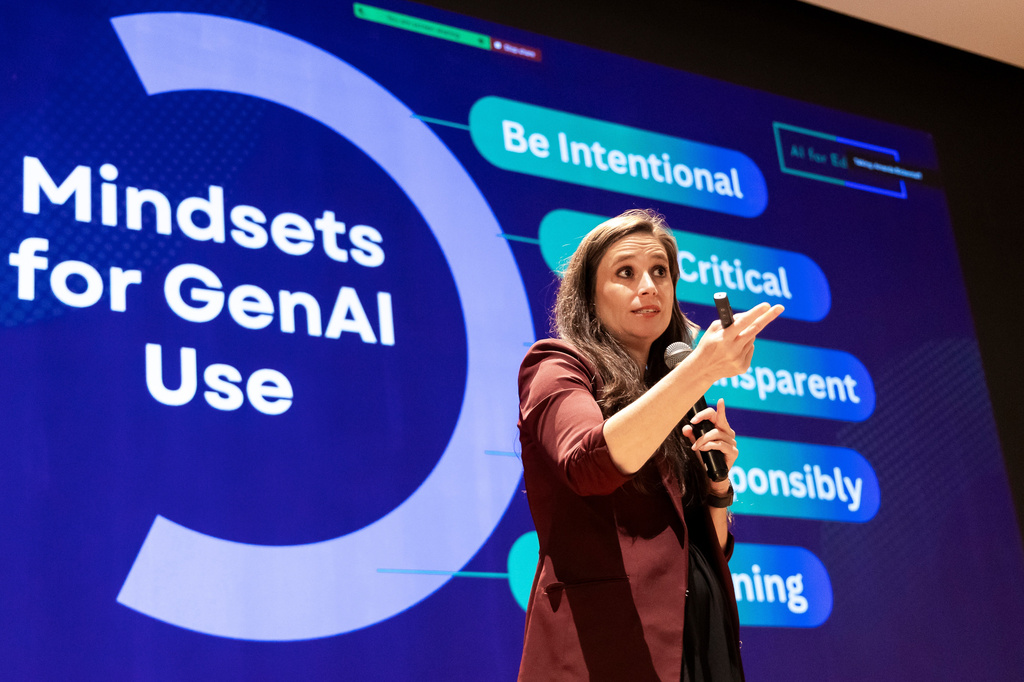
During the meeting, an instructor asked an AI tool to "create a map of the world." The result surprised everyone and made them laugh. On the big screen was a map full of strange mistakes. Mali, an African country, was spelled "Mail," and Egypt became "Sopth." In place of Libya, the map simply said "Africa." Many other country names were wrong or made no sense.
The instructor was Amanda Bickerstaff. She is the founder and head of AI For Education. This group helps schools create AI rules and provides training for teachers. She said the map demonstration sends a clear message: Students should not trust these tools too much.
At first, many American public schools tried to stop students from using AI. Now more of them let students try AI in class. One reason is that students can see its weaknesses for themselves. Sometimes AI invents information that is not true. Teaching students how to use AI wisely has become an important goal in 2026. As one education expert said, good AI use also means knowing when not to use it.
(AP)
Step 2
Check the Vocabulary and Phrases
Check the following vocabulary and phrases.
以下の単語やフレーズの発音、意味、使い方を確認しましょう。
principal
校長
the person who is in charge of a school
Our new principal wants to make the school a better place.
新しい校長先生は、学校をより良い場所にしていきたいと考えています。
make sense
意味をなす
to be clear and easy to understand
When I read the old note again, it finally made sense to me.
その古いメモをもう一度読んでみて、ようやく意味がわかりました。
demonstration
実演
an act of showing how something works or is done
We watched a cooking demonstration at the store last weekend.
先週末、私たちはその店で料理の実演を見ました。
trust
信用する
to believe that something is reliable, true, or good
You can trust him because he always keeps his promises.
彼はいつも約束を守るので、信用できます。
wisely
賢く
in a way that shows good sense and judgment
She used her free time wisely and finished all her homework.
彼女は空き時間を有効に使って、宿題をすべて終わらせました。
Step 3
Comprehension Questions
Answer the following questions based on the article.
理解度問題に挑戦しましょう。
What happened when the instructor asked the AI tool to make a map of the world?
Why do a growing number of schools now allow students to work with AI in class?
Step 4
Discussion
Share your opinions on the following questions.
以下の質問について、自分の考えを述べてみましょう。
What is one thing you do on a computer or phone every day?
Do you use any AI tools? Why or why not?
When you want to learn something new, how do you usually find the answer?
Do you think schools should make rules about how students use AI? Please explain your answer.
Can you think of one good way and one bad way for students to use AI at school?