
 レッスンを予約する
Step 1
Read the Article
Read the article to understand the main idea.
記事を読んで、おおよその内容をつかみましょう。
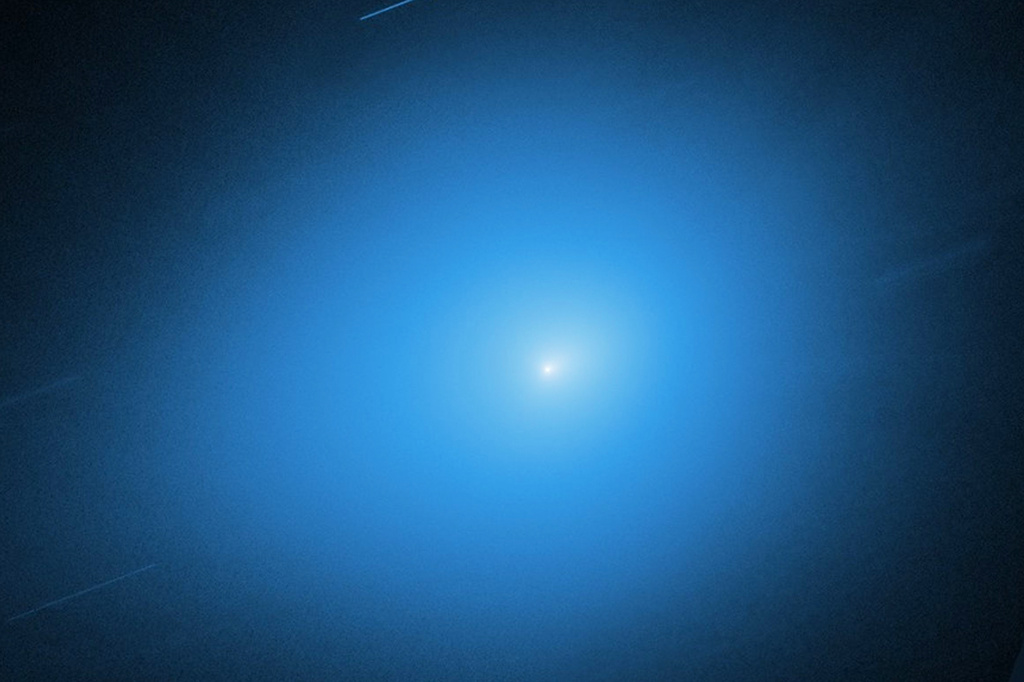
Radio scans find no alien technology on interstellar comet 3I/Atlas
The SETI Institute, a group searching for extraterrestrial life, said the interstellar comet 3I/Atlas is natural, with no sign of alien technology. On June 3, 2026, it reported that radio scans by its telescope in Northern California found nothing artificial.
The comet was discovered in the summer of 2025 and identified as a visitor from another star. A few argued, without evidence, that it could be linked to intelligent life. It is only the third known object from another star to enter the solar system, all natural.
In July 2025, just after the discovery, SETI watched the comet for over seven hours, scanning for technosignatures, or signs of technology. It detected nearly 74 million narrow-band signals, but after removing human interference and those matching the comet's movement, only about 200 remained, all from Earth-based technology or nearby satellites. The findings appeared in the Astronomical Journal.
Co-author Valeria Garcia Lopez of Furman University said the results show that today's technology could easily detect such a signal if one were there. "That is why it is important to keep searching for technosignatures, even from objects we might not expect to have signals," she said.
Lead author Sofia Sheikh and her team pointed out that NASA's Voyager probes, launched in the 1970s, will one day drift into other star systems, proving such objects can exist. 3I/Atlas is now nearly 1 billion miles (1.3 billion kilometers) away, never to return, and may be 11 billion years old, twice the sun's age.
(AP)
Step 2
Check the Vocabulary and Phrases
Check the following vocabulary and phrases.
以下の単語やフレーズの発音、意味、使い方を確認しましょう。
extraterrestrial
地球外の
connected with or coming from somewhere beyond the planet Earth
My little brother loves drawing extraterrestrial creatures with green skin and big eyes.
弟は、緑色の肌で大きな目をした地球外の生き物を描くのが大好きです。
interstellar comet
恒星間彗星
a comet that comes from outside our solar system and travels through the space between stars
At the science museum, my son was excited to learn how an interstellar comet travels between the stars.
科学館で、息子は恒星間彗星がどのように星々の間を移動するのかを知ってわくわくしていました。
artificial
人工の
created by people; not happening naturally
This drink tastes strange because it contains a lot of artificial flavors.
この飲み物は人工の香料がたくさん入っているので、変な味がします。
detect
検出する
to discover or notice something, especially something that is not easy to see, hear, or smell
The new device can detect very small amounts of gas in the air.
その新しい装置は空気中のごく少量のガスも検出できます。
interference
干渉
extra noise or unwanted signals that disturb a radio, television, or similar device
We could not hear the radio clearly because of interference from a nearby phone.
近くの電話からの干渉でラジオがはっきり聞こえませんでした。
Step 3
Comprehension Questions
Answer the following questions based on the article.
理解度問題に挑戦しましょう。
What did the SETI Institute report about its radio scans of the comet 3I/Atlas?
According to Valeria Garcia Lopez, why is it still worth looking for signs of alien technology, even on unlikely objects?
Step 4
Discussion
Share your opinions on the following questions.
以下の質問について、自分の考えを述べてみましょう。
Are you interested in space and astronomy? Why or why not?
If scientists ever found real signs of alien life, how do you think people around the world would react? How would you react?
Some people believed the comet might be linked to intelligent life, even without evidence. Why do you think people are sometimes ready to believe such ideas?
If you could explore anywhere, somewhere in space or here on Earth, where would you most like to go? Why?
Do you think governments should spend money on searching for life in space, or should that money be used for other things? Please support your answer.