
 レッスンを予約する
Step 1
Read the Article
Read the article to understand the main idea.
記事を読んで、おおよその内容をつかみましょう。
Solar kits bring electricity to disaster areas and refugee camps
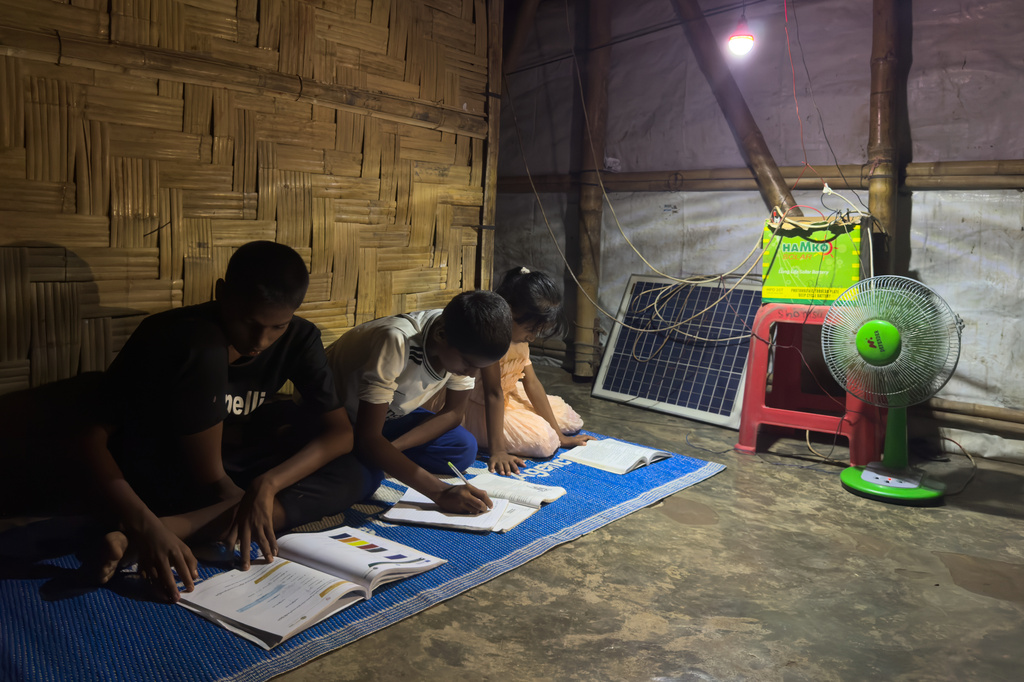
In 2020, a refugee family living in a camp in Teknaf, Bangladesh, was given a portable solar kit as aid. It has become their main source of electricity and has made life much easier. “We can now charge our phones, cook with light, children can study at night and use fans during the hot season,” said Saber, 35.
From Nepal’s flood zones to refugee camps in Africa, solar power is helping many people after disasters. Experts say access to electricity is a basic need. Clean energy is more important than ever because climate change is causing more extreme weather and fuel prices often change quickly.
These compact kits are easy to recharge, and they work without power companies. Although they used to be very expensive, they have become much cheaper because factories make many more of them than before.
Still, moving to solar is not always easy. Aid groups have used diesel generators for years, and changing systems takes time and trust. Cuts in aid money have set this progress back, and for many it is still too expensive.
Even so, many families want these kits. By the end of 2026, Hope For Ukraine, a nonprofit organization, will have given out over 3,200 of them. However, about 20,000 families are still waiting. With more solar power, the world can depend less on fossil fuels.
(AP)
Step 2
Check the Vocabulary and Phrases
Check the following vocabulary and phrases.
以下の単語やフレーズの発音、意味、使い方を確認しましょう。
refugee
難民
a person who has been forced to leave their country, especially because of war or for political or religious reasons
The refugee family found a new home in our town.
その難民の家族は、私たちの町に新しい住まいを見つけました。
aid
援助
money, food, or other help that is given to people or countries in need
The school gives aid to students who cannot buy their textbooks.
その学校では、教科書を購入できない生徒に支援を提供しています。
generator
発電機
a machine that produces electricity
When the power went out, we used a generator to keep the lights on.
停電したとき、私たちは発電機を使って明かりを灯し続けました。
set A back(過去分詞:set)
~を遅らせる
to delay the progress of something
The heavy rain set our trip back by a few days.
大雨のせいで、旅行が数日延期になりました。
fossil fuel
化石燃料
a fuel such as coal, oil, or gas that is formed from the remains of plants and animals that lived long ago
Many cars still run on fossil fuels like gasoline.
多くの車は、今でもガソリンなどの化石燃料で走っています。
Step 3
Comprehension Questions
Answer the following questions based on the article.
理解度問題に挑戦しましょう。
How does the family use the solar kit in their daily life?
Why do the solar kits cost less than they used to?
Step 4
Discussion
Share your opinions on the following questions.
以下の質問について、自分の考えを述べてみましょう。
Do you use any solar-powered things in your daily life, like a light, a charger, or a calculator? Please explain your answer.
Imagine the electricity in your home stopped for a whole day. How would you spend the day?
The family in the article uses a solar kit to charge phones and run fans. In your daily life, what electrical devices would be the hardest to live without? Why?
What do you think is the biggest advantage of using solar energy? Why?
The article says solar kits are becoming cheaper. Do you think most homes will use clean energy in the future? Why or why not?