
 レッスンを予約する
Step 1
Read the Article
Read the article to understand the main idea.
記事を読んで、おおよその内容をつかみましょう。
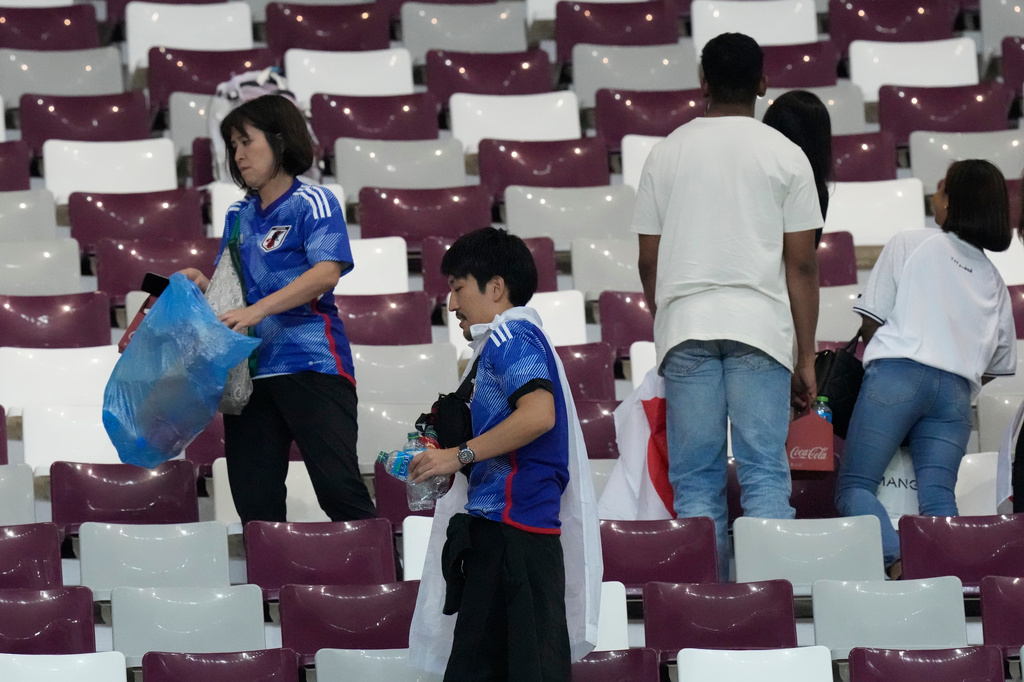
Japanese fans keep stadiums clean at World Cup
Japanese soccer fans are well known for cleaning stadiums after matches. Scenes of them sweeping stadiums and picking up trash after a match first drew public attention in France in 1998 — Japan's first appearance in the World Cup. Since then, the tradition has continued and it's certain to continue in June, when Japan plays in the United States and Mexico. People from other countries are often surprised by this behavior.
There are cultural reasons behind this habit, starting in childhood. In many Japanese elementary schools, students are responsible for cleaning their classrooms and school areas. Koichi Nakano, who teaches politics and history at Sophia University, explains that fans at global events behave the same way they learned to as schoolchildren. There is even a Japanese phrase for this: "Tatsu tori ato wo nigosazu." The literal translation is: "A bird leaves nothing behind." In English: "Return it the way you found it."
William Kelly, a professor of anthropology at Yale University and a specialist on Japan, said the tradition is linked to soccer more than other sports. He wrote in an email that the J-League was trying to distinguish itself from baseball by emphasizing teams' strong ties to their local communities and commitment, and that soccer fans felt, and feel, more a part of the club and its stadium.
(AP)
Step 2
Check the Vocabulary and Phrases
Check the following vocabulary and phrases.
以下の単語やフレーズの発音、意味、使い方を確認しましょう。
sweep
掃く
to clean or clear a surface using a brush or broom
She sweeps the floor every morning before breakfast.
彼女は毎朝、朝食前に床を掃きます。
draw attention
注意を集める
to make people notice something
The bright colors of the poster drew attention from students in the hallway.
ポスターの鮮やかな色が廊下の生徒たちの注目を集めました。
literal
文字通りの
the basic or original meaning of a word or phrase
Don’t take his joke in a literal way.
彼の冗談を文字通りに受け取らないでください。
anthropology
人類学
the study of human societies, cultures, and their development
She is studying anthropology at university.
彼女は大学で人類学を勉強しています。
distinguish
区別する
to recognize or show the difference between people or things
It is hard to distinguish between the two twins.
その双子を見分けるのは難しいです。
Step 3
Comprehension Questions
Answer the following questions based on the article.
理解度問題に挑戦しましょう。
What do Japanese soccer fans usually do after matches in the stadiums?
Why does William Kelly think the clean-up tradition is more connected to soccer than other sports?
Step 4
Discussion
Share your opinions on the following questions.
以下の質問について、自分の考えを述べてみましょう。
After an event, what do you usually do with your trash? Why?
Do you think cleaning up after yourself in public is important? Why or why not?
Should schools in other countries adopt the Japanese system of having students clean their own classrooms? What would be the benefits and challenges?
What skills do you think people can learn through cleaning?
Can you think of a tradition or custom in your own culture that people from other cultures might find surprising?