
 レッスンを予約する
Step 1
Read the Article
Read the article to understand the main idea.
記事を読んで、おおよその内容をつかみましょう。
Confusing new VAR rule contributes to Switzerland’s World Cup exit
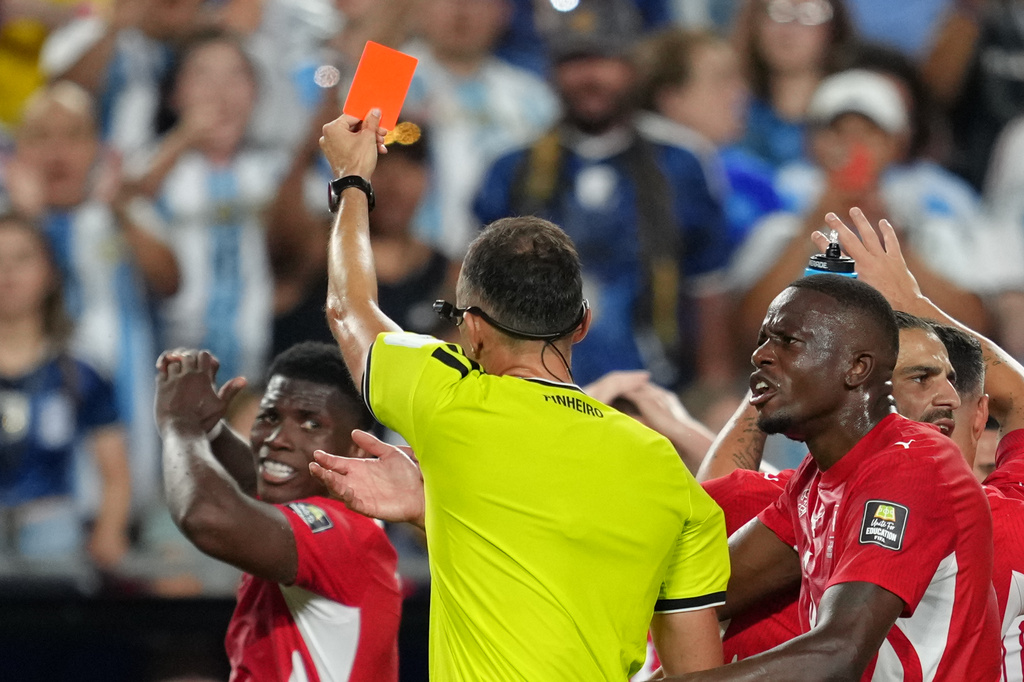
On July 11, 2026, Switzerland's Breel Embolo was sent off in a World Cup quarterfinal against Argentina under a new "mistaken identity" rule. Referee Joao Pinheiro had not noticed in real time that Embolo faked a foul during a challenge from Argentina's Leandro Paredes, who was shown a yellow card first. Because Paredes had already been booked, the video assistant referee (VAR) could step in, since the rule allows a review when a referee penalizes the wrong player. After watching a replay, Pinheiro ruled that Embolo had committed a "clear simulation," showed him a second yellow card, and sent him off. The call came five minutes after Switzerland had tied the score at 1-1, and Argentina won 3-1 after extra time.
"The referee made the wrong decision," Switzerland coach Murat Yakin said. "I know they will protect their referee but this rule destroyed our game today, and it's very painful, and to be eliminated in that way hurts a lot."
Other teams have also criticized new World Cup rules and technology. Germany was eliminated in the round of 32 after a goal was disallowed for a minor push on Paraguay's goalkeeper, leading coach Julian Nagelsmann to resign. Croatia's late equalizer against Portugal was ruled offside after ball sensors detected a touch too small to see on video, and former coach Zlatko Dalić said the decisions "take the joy out of football." Egypt and Norway also had goals disallowed in contested VAR reviews, deepening debate over technology's role in the tournament.
(AP)
Step 2
Check the Vocabulary and Phrases
Check the following vocabulary and phrases.
以下の単語やフレーズの発音、意味、使い方を確認しましょう。
send A off
退場させる
to order a player to leave the field during a game, usually as punishment for a serious foul
The referee sent the player off for arguing too aggressively during the amateur soccer match.
審判は、アマチュアサッカーの試合中に激しく言い争ったその選手を退場させた。
book
(反則で)警告する、カードを出す
to officially caution a player, usually by showing a card, as punishment for a foul
In the youth league match, the referee booked a defender for a late tackle.
ユースリーグの試合で、審判は遅れたタックルをしたディフェンダーに警告を出した。
rule
判定を下す、裁定する
to give an official decision about something, especially as a referee, judge, or other authority
The judges at the singing competition ruled that both contestants deserved the top prize.
その歌唱コンテストの審査員は、出場者2人とも優勝に値すると判定した。
eliminate
(大会などで)敗退させる
to defeat a team or player so that they can no longer take part in the rest of a competition
She was eliminated from the chess tournament in the second round.
彼女はチェス大会の2回戦で敗退した。
disallow
(公式に)無効とする、認めない
to officially refuse to accept something as valid
The insurance company disallowed his claim because he had missed the deadline.
保険会社は、期限を過ぎていたため、彼の請求を認めなかった。
Step 3
Comprehension Questions
Answer the following questions based on the article.
理解度問題に挑戦しましょう。
What was the result of the quarterfinal match between Switzerland and Argentina?
Why did the video assistant referee become involved in the decision that led to Breel Embolo's dismissal?
Step 4
Discussion
Share your opinions on the following questions.
以下の質問について、自分の考えを述べてみましょう。
Do you think video technology like VAR makes sports more fair, or does it take away some of the excitement of the game? Why?
How do you think players and coaches should react publicly when they disagree with a referee's decision?
Some fans say new rules and technology make games harder to follow. What could sports organizations do to explain new rules more clearly to fans?
Do you think human referees should always have the final say in a match, even when technology suggests a different decision? Please explain your answer.
Besides soccer, can you think of another sport or activity where new technology has changed how decisions are made? What effect has it had?