
 レッスンを予約する
Step 1
Read the Article
Read the article to understand the main idea.
記事を読んで、おおよその内容をつかみましょう。
The everlasting appeal of the American comic book
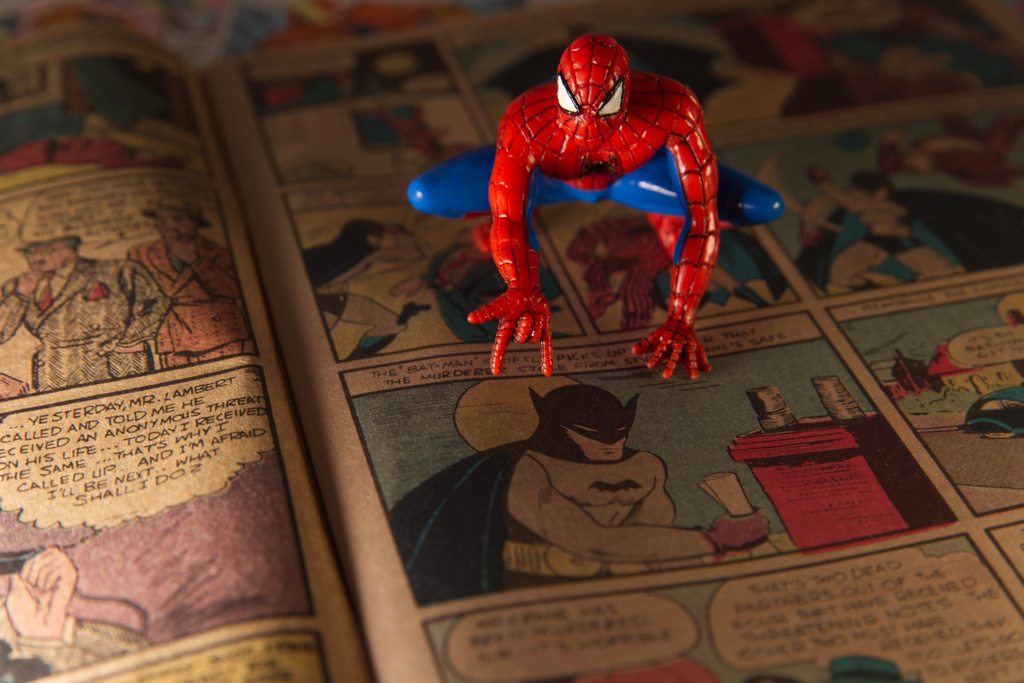
Superhero comic books may look silly: shiny covers, muscular bodies wearing skin-tight suits, and heroes flying through the air. Yet these thin monthly books remain one of the clearest cultural products of the United States. Compared with European graphic novels, they can seem light and childish. Compared with Japanese manga, they may seem more innocent because they stay focused on heroism. They are also part of American consumer culture: what once cost only a few cents can now cost as much as a latte.
Still, what truly makes them American lies in the stories they tell. In 1961, the Fantastic Four introduced a new kind of superhero. They were ordinary people transformed against their will by cosmic rays, at once powerful and unwilling victims of science and circumstance. Characters such as Spider-Man, the Hulk, and Wolverine followed: lonely outsiders pushed to become imperfect heroes, bound to save us over and over again. They follow the moral rule made famous by Peter Parker, the mild-mannered student behind the mask of Spider-Man, that with great power comes great responsibility. And beyond that lies a belief that is deeply, perhaps naively, American: that power, guided by justice, will ultimately do what is right.
Today, Marvel and DC, the two biggest comic book publishers, continue to reshape those ideas. More diverse heroes, including women and people of color, have moved into leading roles, reflecting a changing society. Yet beneath these changes, older tensions remain — loneliness, the weight of the past, and the dangers of unchecked power. Perhaps that is exactly why these comics continue to draw readers in. Ridiculous as they may be, superhero comics show America as it truly sees itself — honorable ideals and all.
(AP)
Step 2
Check the Vocabulary and Phrases
Check the following vocabulary and phrases.
以下の単語やフレーズの発音、意味、使い方を確認しましょう。
heroism
英雄主義、英雄的行為
great courage and the willingness to put yourself in danger in order to help others or do what is right
The soldier was admired for his heroism in saving his fellow soldiers during the battle.
その兵士は戦闘中に仲間を救った英雄的行為で称えられました。
unwilling
望まない
not wanting to do something
He was unwilling to accept the job offer because it required him to move to another city.
彼は別の都市への引っ越しが必要だったため、その仕事のオファーを受けることを望みませんでした。
circumstance
状況、境遇
the conditions and facts that makes a situation the way it is
She left her job due to personal circumstances beyond her control.
彼女は自分ではどうにもならない個人的な事情により、仕事を辞めました。
naively
無邪気に、純粋すぎるほど
in a way that shows that you lack experience or knowledge and believe that things are simpler than they really are
She naively believed that everyone in the city would be friendly and helpful.
彼女は都会の人々が皆、親切で助けてくれると無邪気に信じていました。
unchecked
歯止め(抑制)が利かない
if something harmful is unchecked, it is continuing or increasing without or despite any limits or attempts to prevent it
Unchecked ambition can lead even good leaders to make harmful decisions.
抑制されない野心は、優れたリーダーでさえも有害な決断へと導くことがあります。
Step 3
Comprehension Questions
Answer the following questions based on the article.
理解度問題に挑戦しましょう。
What lesson do heroes such as Spider-Man, the Hulk, and Wolverine live by?
How have Marvel and DC comics changed in recent years?
Step 4
Discussion
Share your opinions on the following questions.
以下の質問について、自分の考えを述べてみましょう。
Do you usually enjoy superhero movies or comics? Why or why not?
Do you prefer heroes who are strong and perfect or heroes who have personal problems? Why?
Can ordinary people be heroes in everyday life? Can you give an example?
Do you think superheroes can reflect a country’s culture or values? Why or why not?
Who comes to mind when you think of a "hero"? Is it a fictional character, a historical figure, or someone in your own life? What makes them a hero to you?