
 レッスンを予約する
Step 1
Read the Article
Read the article to understand the main idea.
記事を読んで、おおよその内容をつかみましょう。
Carbon credits make clean cooking affordable in Africa
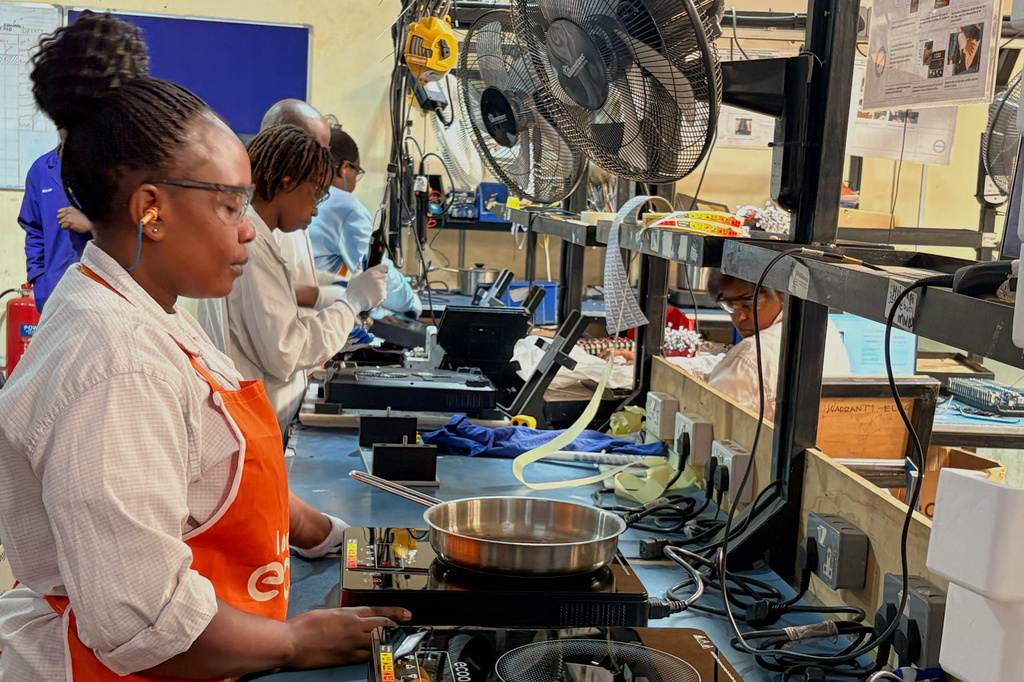
Every morning, Mary Kavutha cooks breakfast for her two children on an electric cooker in her home in Nairobi, Kenya. In 2024, she relied on a charcoal cookstove that filled her kitchen with smoke and cost about $1.15 a day in fuel. Now, she notes, 80 cents of electricity cooks several meals. "It cooks much faster, and is much safer because I have young children," Kavutha said.
Nearly 1 billion Africans still cook with charcoal or firewood. Kavutha switched not out of climate concerns but because clean stoves have become affordable. Their low price comes from carbon credit financing, which lets companies raise money against future income from cutting emissions. Investors cover much of the initial cost and receive income from carbon credits generated as households burn less charcoal and wood.
"Our biggest innovation is not the stove itself, but the financing behind it," said Peter Scott, who founded BURN, a company that makes clean cookstoves. With carbon subsidies, an efficient stove that normally sells for about $40 can cost as little as $5. BURN says it has distributed over 7.3 million cookstoves in 11 African countries.
Still, critics warn that relying too heavily on carbon credits is risky. In February 2026, the Kenyan firm Koko Networks closed after failing to win government approval to sell credits. Carbon money can help but should not be the foundation of the transition, argued George Mwaniki, an air quality expert.
For Kavutha, the result is simple. "My kitchen is cleaner, my children are safer, and I spend less," she said.
(AP)
Step 2
Check the Vocabulary and Phrases
Check the following vocabulary and phrases.
以下の単語やフレーズの発音、意味、使い方を確認しましょう。
rely on
頼る
to need or depend on somebody or something
Many students rely on their phones to wake up in the morning.
多くの学生は、朝起きるためにスマートフォンに頼っています。
charcoal
木炭
a black substance made by burning wood slowly with little air, used as a fuel
We grilled meat over charcoal in the garden last weekend.
先週末、庭で炭火を使って肉を焼きました。
out of
〜が理由で
used to show the reason or motive for doing something
I chose this job out of interest, not for the high salary.
この仕事は、高い給料のためではなく、興味があったから選びました。
carbon credit
炭素クレジット(排出権)
a unit that represents a reduction in emissions, which companies can buy and sell
Our company sold some of its carbon credits to another business last year.
当社は昨年、保有する炭素クレジットの一部を別の会社に売却しました。
subsidy
補助金
money that is paid by a government or an organization to reduce the cost of a product or service
My city offers a subsidy to people who buy energy-saving windows.
私の住む市では、省エネ窓を購入する人に補助金を出しています。
Step 3
Comprehension Questions
Answer the following questions based on the article.
理解度問題に挑戦しましょう。
How many people across Africa still rely on charcoal or wood to cook their meals?
Why can a cookstove that usually costs around $40 be bought for only about $5?
Step 4
Discussion
Share your opinions on the following questions.
以下の質問について、自分の考えを述べてみましょう。
Have you cooked a meal recently? What did you make?
What kind of energy do you use for cooking at home — for example, gas or electricity?
What changes could you make at home to reduce energy costs or environmental impact?
How is cooking at home different now from the way people cooked in the past?
Would you consider switching to cleaner energy appliances at home? What would motivate you to make that change?