
 レッスンを予約する
Step 1
Read the Article
Read the article to understand the main idea.
記事を読んで、おおよその内容をつかみましょう。
Kakigori: The evolution of the quintessential Japanese summer treat
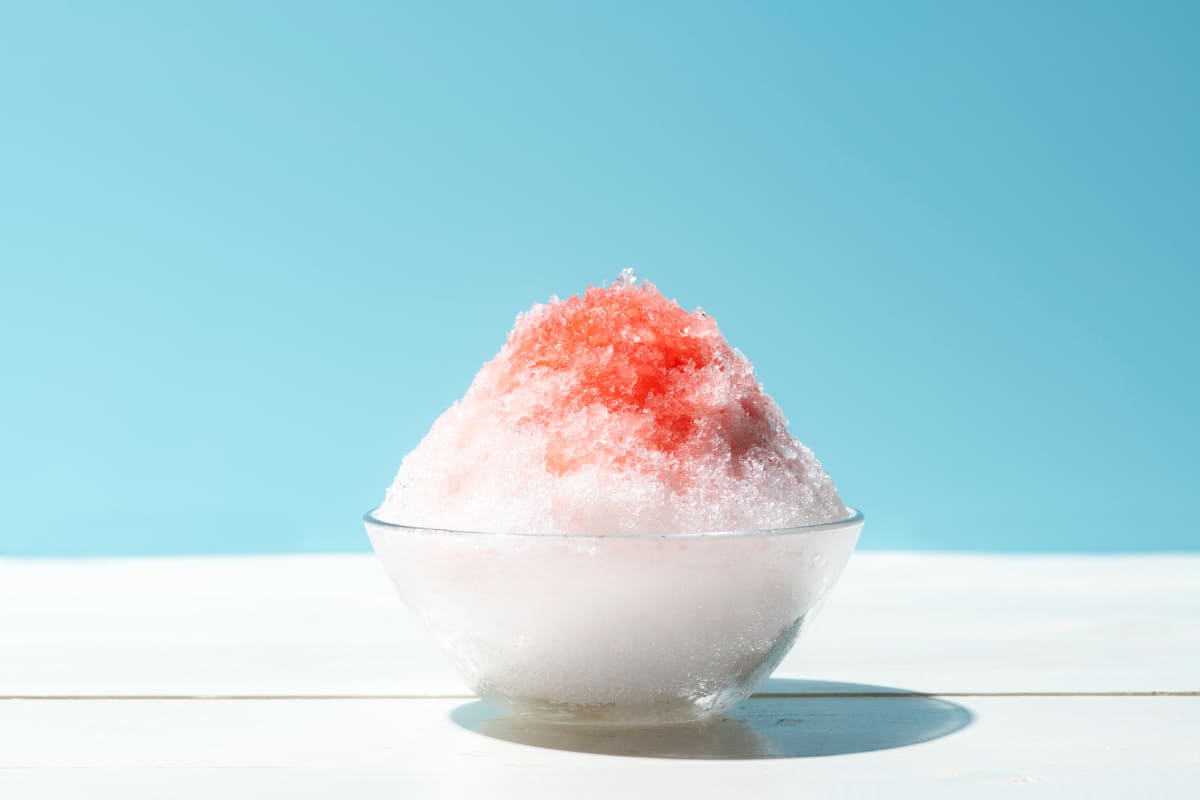
Nothing says summer in Japan like kakigori! One of my favorite things to do is to eat kakigori on a hot summer day. Although I spent my childhood in the U.S. eating frozen treats like snow cones and popsicles, they do not even compare to the wonder of the quintessential Japanese summer treat, kakigori.
kakigori, often called shaved ice in English, has a long history. It was first mentioned in a writing called The Pillow Book in the Heian Period. At that time, kakigori was exclusively a treat for the elite. The advancement of cold storage technology in the Meiji Period, and the invention of ice shaving machines in the 1930s made it accessible to the common people. It began to appear at local restaurants and became a staple of street stalls and summer festivals. Nowadays, many people even buy their own kakigori machines to make it fresh in their homes.
So, what makes kakigori so special? The key is the finely shaved ice, which many compare to freshly fallen snow that melts on the tongue. Using a huge block of ice to create this texture is still very common, although home ice makers and some shops use small ice cubes. The traditional way to make kakigori is to pour fruit-flavored syrups topped with condensed milk over the shaved ice, but kakigori has evolved into a culinary work of art, with some shops using fruit, bean paste, mochi, and matcha as toppings.
The popularity of kakigori has spread to my home country, the United States. While it has always been popular in Hawaii due to the presence of a large Japanese community, restaurants serving kakigori have popped up around the country. As the weather continues to get hotter and hotter each summer, this unique Japanese summer treat is bound to become even more and more popular.
(The Japantimes Alpha)
Step 2
Check the Vocabulary and Phrases
Check the following vocabulary and phrases.
以下の単語やフレーズの発音、意味、使い方を確認しましょう。
quintessential
典型的な
representing the perfect example of something
Kyoto is often seen as the quintessential Japanese city, with its temples, gardens, and traditional houses.
京都は、寺院や庭園、伝統的な家屋があることから、日本を代表する典型的な都市と見なされています。
popsicle
棒付きアイスキャンディー
a piece of ice that tastes of fruit, served on a stick
The children enjoyed popsicles in the park on a hot summer day.
子どもたちは暑い夏の日に公園でアイスキャンディーを楽しみました。
culinary
料理の
Relating to cooking or the kitchen, especially the art or practice of preparing food.
She developed her skills by experimenting with various culinary techniques from different cultures.
彼女はさまざまな文化の料理技術を試すことで料理の技術を磨いた。
be bound to
~する運命にある
something is certain or very likely to happen
With such talented players, the team is bound to win the championship.
これほど才能のある選手がいれば、そのチームはきっと優勝するに違いありません。
pop up
現れる
To happen unexpectedly or appear suddenly in a situation
Problems can pop up when you least expect them.
問題は、最も予期しないときに突然起こることがあります。
Step 3
Comprehension Questions
Answer the following questions based on the article.
理解度問題に挑戦しましょう。
When did kakigori become accessible to the common people in Japan?
How does the author expect kakigori will be in the future?
Step 4
Discussion
Share your opinions on the following questions.
以下の質問について、自分の考えを述べてみましょう。
Do you like eating cold treats in summer? What is your favorite?
Do you think cold treats like kakigori help you feel better on hot days? Why or why not?
Do you think traditional foods are important to a country’s culture? Why or why not?
How do you think technology (like ice machines or storage) changes the way people enjoy food?
Climate change is making summers hotter. How might this affect food culture in the future?