
 レッスンを予約する
Step 1
Read the Article
Read the article to understand the main idea.
記事を読んで、おおよその内容をつかみましょう。
Archaeologists find huge Viking textile production site in Denmark
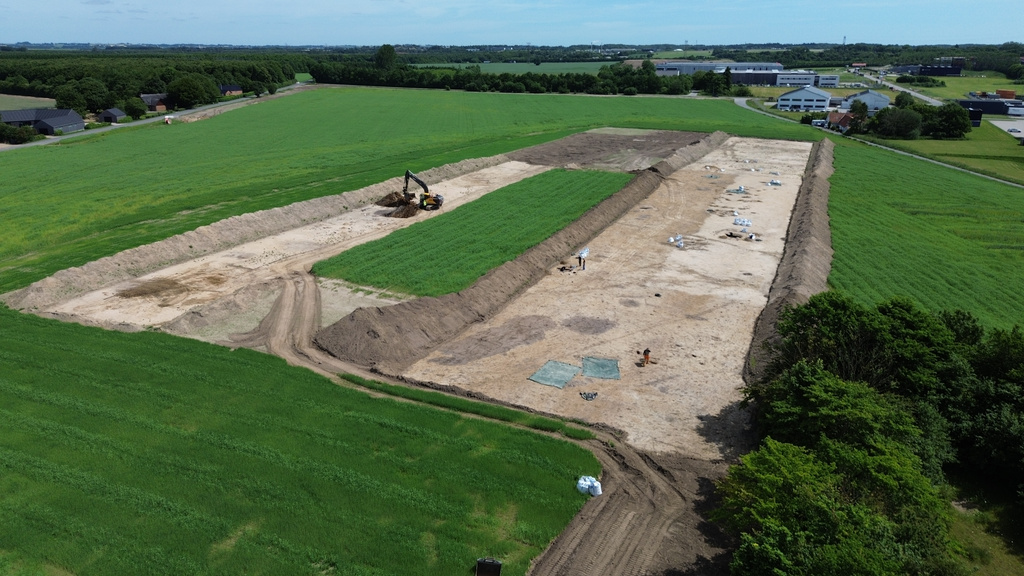
Archaeologists have found a huge Viking Age textile production site in Denmark that dates back more than 1,000 years. The discovery shows how advanced Viking society was.
The site covers 100,000 square meters. It includes an area for processing flax, a plant used to make cloth, and more than 80 pit houses — semi-buried huts that Vikings used as workshops and homes. The settlement lies in Søften, 10 kilometers north of Aarhus, Denmark's second-largest city. It dates to the late Iron Age and early Viking Age, between A.D. 600 and 950.
Archaeologist Liv Stidsing Reher-Langberg, who led the 10-month dig, said the site's clear focus on textile production makes it different from other settlements of the period. She said tools for making cloth show what people did inside the pit houses. Her team also found silver coins, glass beads and pottery. The site had separate areas for production and crafts, plus a single home. This suggests a powerful person managed the work and controlled its resources.
Historian Kasper Andersen called the discovery "another piece in the puzzle" for understanding the region at that time. He explained that a production site this large must have been part of a much bigger international trade network. Andersen added that the find shows Vikings were not simple or wild people, but a well-organized society.
(AP)
Step 2
Check the Vocabulary and Phrases
Check the following vocabulary and phrases.
以下の単語やフレーズの発音、意味、使い方を確認しましょう。
archaeologist
考古学者
a person who studies the buildings, tools, and other objects of people who lived in the past
My cousin wants to be an archaeologist and study ancient cities.
いとこは考古学者になって古代の都市を研究したがっています。
pit house
竪穴式住居
a house that is partly built below the surface of the ground
The museum showed us how people lived in a pit house long ago.
博物館では、昔の人がどのように竪穴式住居で暮らしていたかを見せてくれました。
settlement
集落、居住地
a place where people have come to live, especially where few or no people lived before
People built a small settlement near the river.
人々は川の近くに小さな集落を作りました。
dig
発掘
the process of carefully removing soil and objects from an area of historical interest
The students joined a dig to look for old coins and tools.
学生たちは古い硬貨や道具を探す発掘調査に参加しました。
well-organized
よく組織された、統制のとれた
planned or arranged in an efficient way, with things working together well
Our team is well-organized, so we always finish our work on time.
私たちのチームはよく組織されているので、いつも時間どおりに仕事を終えます。
Step 3
Comprehension Questions
Answer the following questions based on the article.
理解度問題に挑戦しましょう。
Where can people find this ancient textile site?
What made the experts believe that one powerful person was in charge of the work?
Step 4
Discussion
Share your opinions on the following questions.
以下の質問について、自分の考えを述べてみましょう。
Have you ever visited a museum about history? What did you see there?
Would you like to join an archaeological dig and look for old objects? Why or why not?
Why do you think it is important to learn about how people lived a long time ago?
In your country, what old places or historical sites are famous?
If people find an important historical site while building a new road, what do you think they should do? Please support your answer.