
 レッスンを予約する
Step 1
Read the Article
Read the article to understand the main idea.
記事を読んで、おおよその内容をつかみましょう。
Kyoto’s Gion Matsuri keeps a 1,000-year-old tradition alive
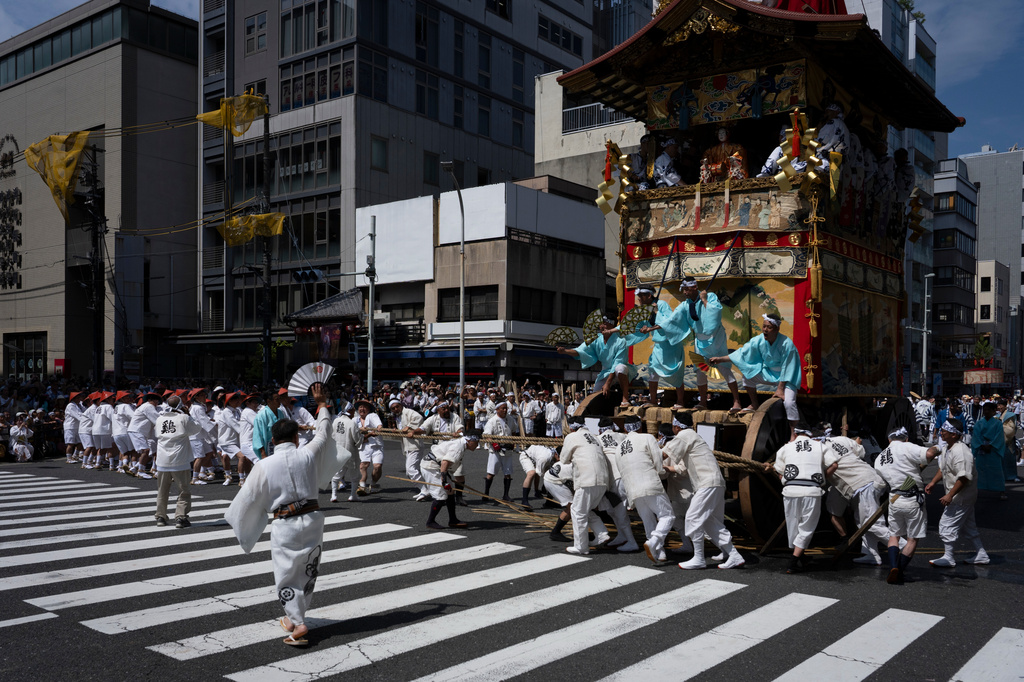
There is a special moment when Katsushi Horikawa feels closer to the gods. It comes as he rides on one of the tall floats, large carts pulled through the streets during the Gion Matsuri. This centuries-old festival in Kyoto, Japan, began more than 1,000 years ago as a ceremony to keep disease away. It takes place throughout the former capital during July. "I am conscious of them when I'm riding on top," Horikawa said.
The parades, accompanied by dances, music and song, draw large crowds every year, and the biggest floats can weigh up to 12 tons. A tradition of prayer and protection lies behind the lively atmosphere. "Those performances are not meant primarily for the entertainment of people," explained Fabio Rambelli, a religious studies professor. "They are offerings to the gods."
The festival also brings the community together. "This is the festival of all the people in the neighborhood," said Jacques Garrigues, a Frenchman who has lived in Kyoto for three decades. He watched the event with his son.
Some traditions have lasted for generations. One is the choice of a boy as a messenger to the gods, whose feet must never touch the ground during the parade. Neighborhoods prepare their floats with great care, trusting that they will drive away bad spirits. Atsushi Matono places the shingi, a holy tree, at the top of one float. Like Horikawa, he feels the gods are near. "I always carry out my work with great care and respect," he added.
(AP)
Step 2
Check the Vocabulary and Phrases
Check the following vocabulary and phrases.
以下の単語やフレーズの発音、意味、使い方を確認しましょう。
conscious
意識している
aware of something; noticing that something exists or is happening
During the test, I was conscious of the teacher walking behind me.
テスト中、私は先生が後ろを歩いているのを意識していました。
accompany
〜に伴って起こる
to happen or exist at the same time as something else
In this area, strong winds usually accompany heavy rain.
この地域では、強い風はたいてい大雨を伴います。
weigh
(重さが)〜ある
to have a particular weight
My suitcase weighs almost 20 kilograms, so I cannot take it on the plane.
私のスーツケースは20キロ近くあるので、飛行機に持ち込めません。
offering
供え物
something that is given to a god as part of a religious ceremony
At the shrine, my grandmother placed some fruit as an offering.
祖母は神社で、お供えとして果物を置きました。
holy
神聖な
connected with God or a religion, and treated as special
Every year, many people climb this holy mountain to pray.
毎年、多くの人がこの神聖な山に祈りを捧げに登ります
Step 3
Comprehension Questions
Answer the following questions based on the article.
理解度問題に挑戦しましょう。
According to the article, what happens to Katsushi Horikawa's feelings during the festival?
Why do neighborhoods put so much care into getting their floats ready?
Step 4
Discussion
Share your opinions on the following questions.
以下の質問について、自分の考えを述べてみましょう。
Have you ever seen a traditional parade or a festival? What do you remember about it?
What kinds of events do you enjoy going to with other people?
What do you enjoy most about working together with other people?
Who in your life enjoys traditional events the most, and what do they like about them?
Some communities have held the same festival for hundreds of years. Do you think this is a good thing, or would you prefer new kinds of events? Why?