
 レッスンを予約する
Step 1
Read the Article
Read the article to understand the main idea.
記事を読んで、おおよその内容をつかみましょう。
St. Bernard dogs keep their tradition alive in the Swiss Alps
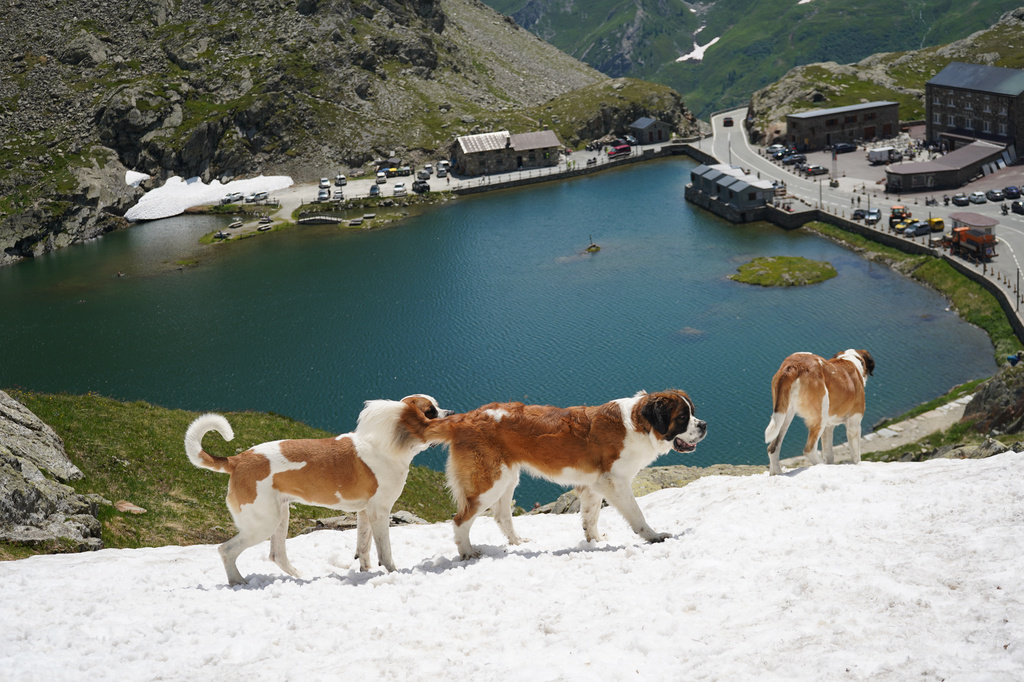
At the Great St. Bernard Pass high in the Swiss Alps, the large mountain dogs still walk the same paths their ancestors patrolled for centuries to find travelers buried beneath the snow.
Down in the valley, a museum called Barryland celebrates the history and future of Switzerland's national dog. It is the world's only museum dedicated to St. Bernards, and since it opened in the summer of 2025 in Martigny, Switzerland, more than 130,000 people have visited. Tourists can watch live grooming and physiotherapy sessions, explore the mountain pass with augmented reality, and learn about the breed.
The dogs first came to the pass in the mid-17th century. They arrived as guard dogs, became companions, and gradually evolved into something the Alpine world had never seen before: animals with an extraordinary instinct for locating hikers lost in snow and fog. Their name comes from the Great St. Bernard Hospice, a shelter for travelers founded in 1050. The most celebrated dog, Barry the First, is credited with saving more than 40 lives in the early 1800s.
Today, St. Bernards no longer carry out rescues, since they are too big to be transported by helicopter. Smaller breeds like Australian shepherds are used instead, though some St. Bernards remain on the pass to keep the tradition alive. The Barry Foundation still breeds them, with around 20 puppies born each year. The dogs now visit hospitals, care homes, schools, and prisons; in 2025 alone, they completed 609 such visits.
For the keepers, the work carries both responsibility and deep affection. "We perpetuate the tradition," keeper Déborah Dini said. "We take care of them. We love them."
(AP)
Step 2
Check the Vocabulary and Phrases
Check the following vocabulary and phrases.
以下の単語やフレーズの発音、意味、使い方を確認しましょう。
ancestor
先祖
a person or animal that lived in the past and from which those alive today are descended
The customs we follow today were shaped by ancestors we will never meet.
私たちが今日従っている慣習は、決して会うことのない祖先によって形づくられました。
physiotherapy
理学療法
the treatment of disease, injury or weakness in the joints or muscles by exercises, massage and the use of light and heat
After I hurt my shoulder, I needed several months of physiotherapy before I could play tennis again.
肩を痛めたあと、またテニスができるようになるまで数か月の理学療法が必要でした。
evolve into
(進化して)〜になる
to develop gradually into a different or more advanced form
Over the years, her small online shop slowly evolved into a well-known brand.
長い年月をかけて、彼女の小さなオンラインショップは徐々に有名なブランドへと発展しました。
instinct
生まれ持った才能、勘
a natural quality that makes people and animals tend to behave in a particular way using the knowledge and abilities that they were born with rather than thought or training
She has a natural instinct for choosing colors that work well together.
彼女には、相性の良い色を選び取る生まれ持った才能があります。
perpetuate
(〜を)存続させる
to make something, especially a custom, belief, or situation, continue for a long time
Passing down old family recipes is one way to perpetuate a culture.
古くから伝わる家庭のレシピを受け継ぐことは、文化を存続させる一つの方法です。
Step 3
Comprehension Questions
Answer the following questions based on the article.
理解度問題に挑戦しましょう。
What is Barryland, and what makes it different from other museums?
How has the role of the St. Bernards changed from the time they first came to the pass until now?
Step 4
Discussion
Share your opinions on the following questions.
以下の質問について、自分の考えを述べてみましょう。
Have you ever had a pet or spent time with an animal? What was it like?
The article says the dogs now visit different places to comfort people. Do you think animals can help people feel better? Why or why not?
Is there any tradition or custom that feels important to you? Please explain your answer.
Some people work hard to keep old traditions alive. Why do you think keeping traditions alive matters to some people?
The dogs are famous around the world for helping people. What animal do you think is special or important in your country?