
 レッスンを予約する
Step 1
Read the Article
Read the article to understand the main idea.
記事を読んで、おおよその内容をつかみましょう。
What’s in a name? A Kabuki family passes down its name
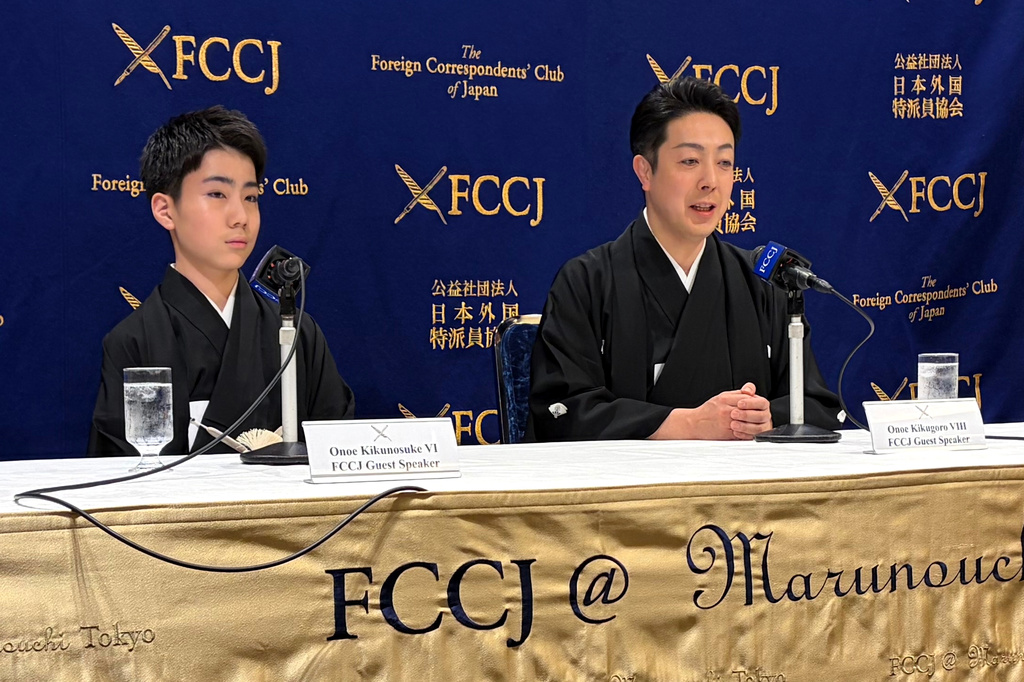
In Kabuki, a traditional Japanese theater that started in the 1600s, passing down a stage name is very important. Every few years, theaters hold special ceremonies to celebrate this tradition. Now the ritual is taking place again, as a new actor becomes the eighth Kikugoro, receiving the name from his 83-year-old father.
The new Kikugoro is Kazuyasu Terajima, who is 48 years old. He says that taking the name means accepting the spirit and responsibility of the actors who came before him. He believes a Kabuki actor’s job is to protect the art, develop it in the present, and pass it on to the next generation.
Kabuki stories often show brave samurai, sad love stories, and characters that can change into demons or animals. All the roles are played by men, who wear colorful costumes and heavy makeup, and some actors specialize in female roles called “onnagata.” The acting is very stylized, with strong poses, music, dance, and singing instead of everyday conversation.
Terajima’s 12-year-old son, Kazufumi, will also inherit a traditional name, Kikunosuke, and is already training as a Kabuki actor. Training begins in childhood and includes daily exercise, careful diet, and strict practice of set patterns called “kata.” Kikugoro believes that, through kata, Kabuki can keep its core message of human kindness and stay meaningful for future generations.
(AP)
Step 2
Check the Vocabulary and Phrases
Check the following vocabulary and phrases.
以下の単語やフレーズの発音、意味、使い方を確認しましょう。
ritual
儀式、決まりごと
a series of actions that are always performed in the same way, especially as part of a religious ceremony
They have a morning ritual of drinking coffee together.
彼らは毎朝一緒にコーヒーを飲むという決まりごとがあります。
pass A on
Aを受け継ぐ
to give something to someone else, especially to the next generation
She wants to pass her skills on to her children.
彼女は自分の技術を子どもたちに受け継ぎたいと思っています。
specialize in
~を専門とする
to spend more time studying or working on one particular subject or skill than others
He specializes in teaching young children.
彼は幼い子どもを教えることを専門としています。
stylized
型にはまった
done in a way that follows a particular style or set of rules, rather than being natural
The logo features stylized flowers.
そのロゴには、様式化された花が描かれている。
inherit
受け継ぐ
to receive money, property, or a quality from someone who has died or from the past
She will inherit her grandmother’s house.
彼女は祖母の家を受け継ぐことになります。
Step 3
Comprehension Questions
Answer the following questions based on the article.
理解度問題に挑戦しましょう。
Who is the new actor that has become the eighth Kikugoro in Kabuki?
What are some typical features of Kabuki performances?
Step 4
Discussion
Share your opinions on the following questions.
以下の質問について、自分の考えを述べてみましょう。
Have you ever watched traditional performances, like theater, dance, or music? If not, would you like to watch them?
Why do you think some people enjoy those traditional performances?
What do you think about keeping traditional arts alive in modern society?
Do you think it is good for children to start learning a particular skill from a young age? Why or why not?
How can people keep traditions while also making them interesting for young people today?